From win reason to repeatable pipeline with one workflow
As an early-stage company, one of your biggest go-to-market priorities is understanding why companies buy from you, and doing that at scale. That is how you truly understand the painful situations your customers are in, and how those situations match the features your product has.
Getting this right does more than sharpen your message-market fit and your go-to-market motion. It also helps you prioritise the items on your product roadmap.
The hard part, as a small team, is doing it at scale. So we've systemised it across HubSpot, Clay and Lemlist. You can swap out the CRM and the sequencer. Clay is the only essential piece.
Situation beats firmographics
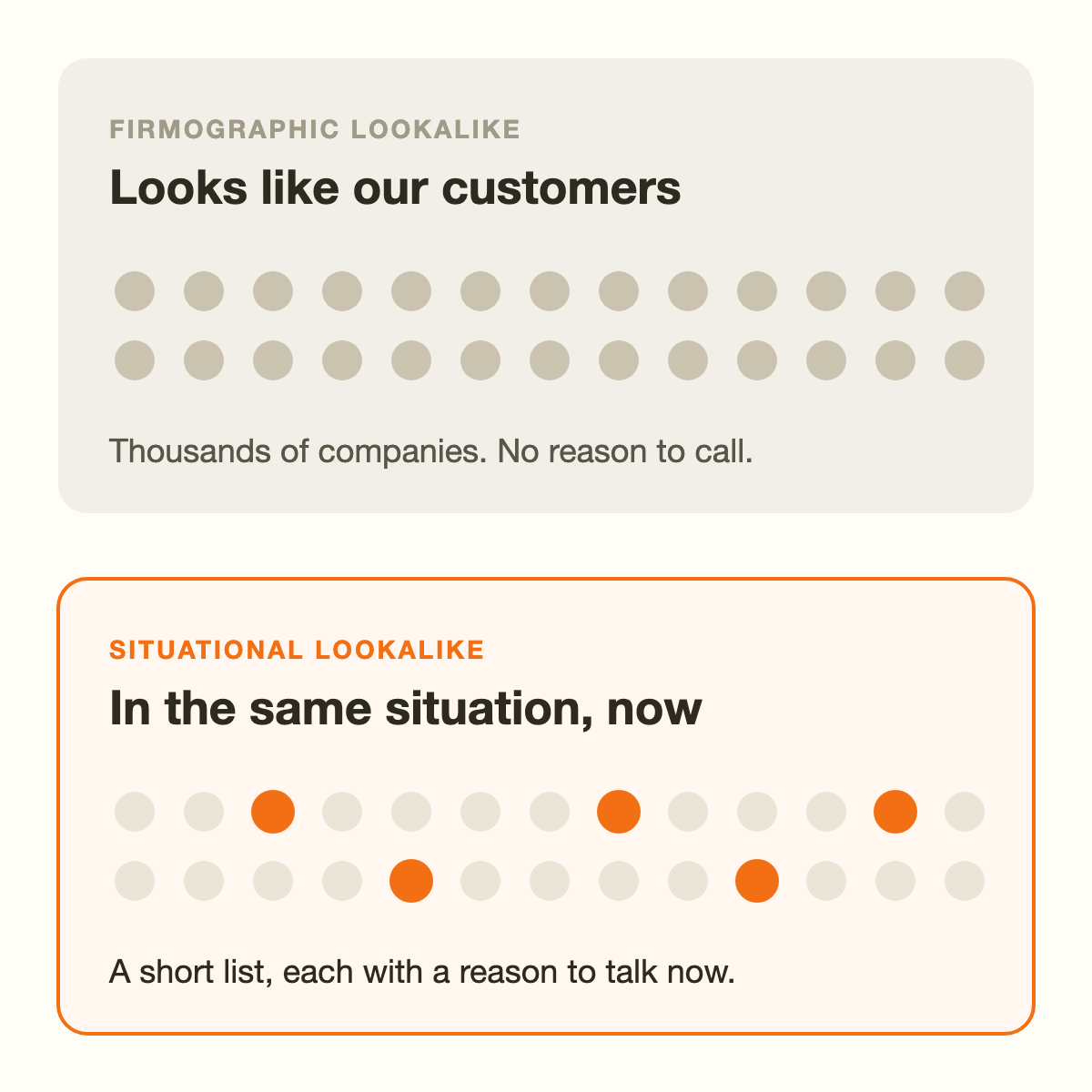
There are plenty of ways to build a lookalike list. I find this is the best way to understand the situational reason why someone buys, not just the firmographic one.
Once your total addressable market is bigger than about 5,000 companies, the situation a company is in matters far more than its industry, size or location. Thousands of companies look like your customers. Only a few are in the same situation this week.
Let the CRM record why you won
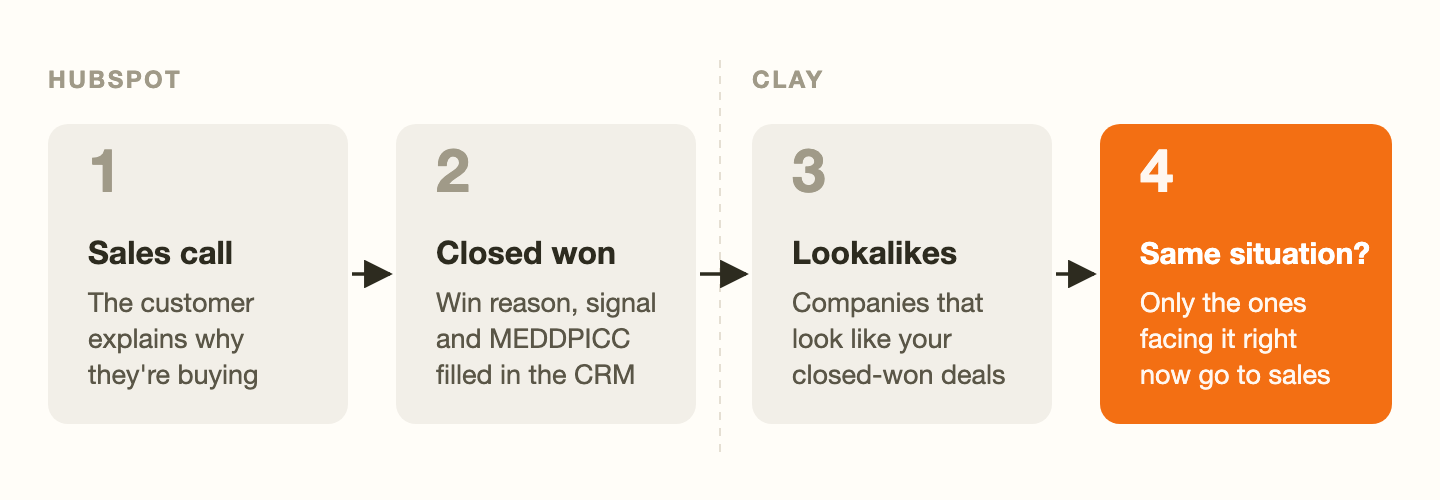
This flow uses a really handy feature: HubSpot's smart CRM. It can take your sales calls and fill in three fields on every deal: the win reason, the signal that closed it, and your MEDDPICC fields.
That means when a deal goes closed-won, you know exactly why it closed, based on the customer's situation and the signal that led to it.
From there, we programmatically pull every new closed-won deal into Clay. Clay reads the signal and finds firmographic lookalikes for our closed-won accounts, so a handful of wins turns into a longer list of similar companies. Then, for each lookalike, it checks whether that company is facing the same situation right now.
The example: a company like Vanta
For this demo we used Vanta, which sells security compliance software, as the example company. Vanta isn't a client and wasn't involved. We modelled the demo on their public positioning, and the HubSpot deals are made-up demo data.
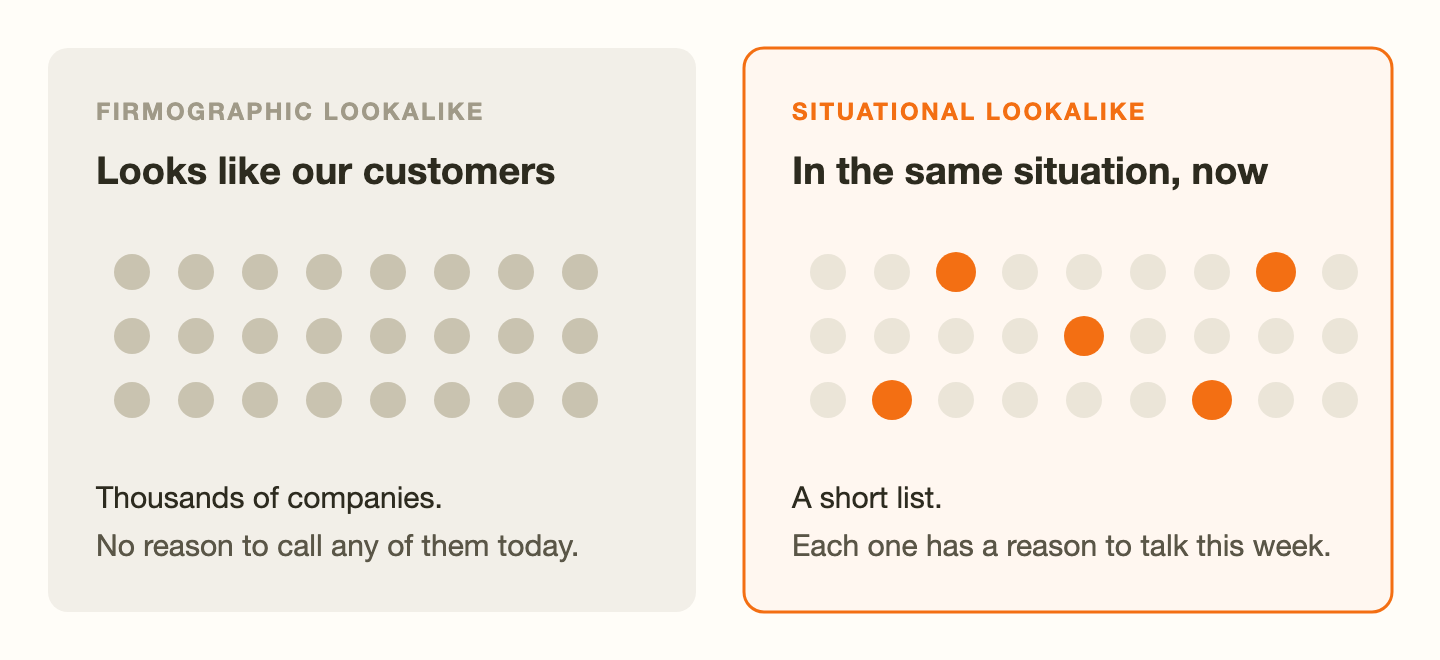
In the demo, Vanta has closed-won five accounts. Across all of them, the signal was the same: they bought because they were entering a tender process. To win the tender, they had to show and document that they maintain ISO 27001 and their other security certifications. That is why they chose Vanta. That's the situation.
All five were HR software companies. That's the firmographic reason, and it's what a normal lookalike would copy. We use the situational signal instead, to prove a lookalike is in a similar buying situation today.
The same thinking is how an early-stage team finds its way into new industries. The situation travels further than the industry does:
Qualify, find the people, attach the copy
We programmatically take each lookalike and qualify it. Is it in a public tender right now? We only accept official government sources as proof.
Once we know there's a signal, we find the relevant decision makers, enrich them with a verified email, and attach the copy.
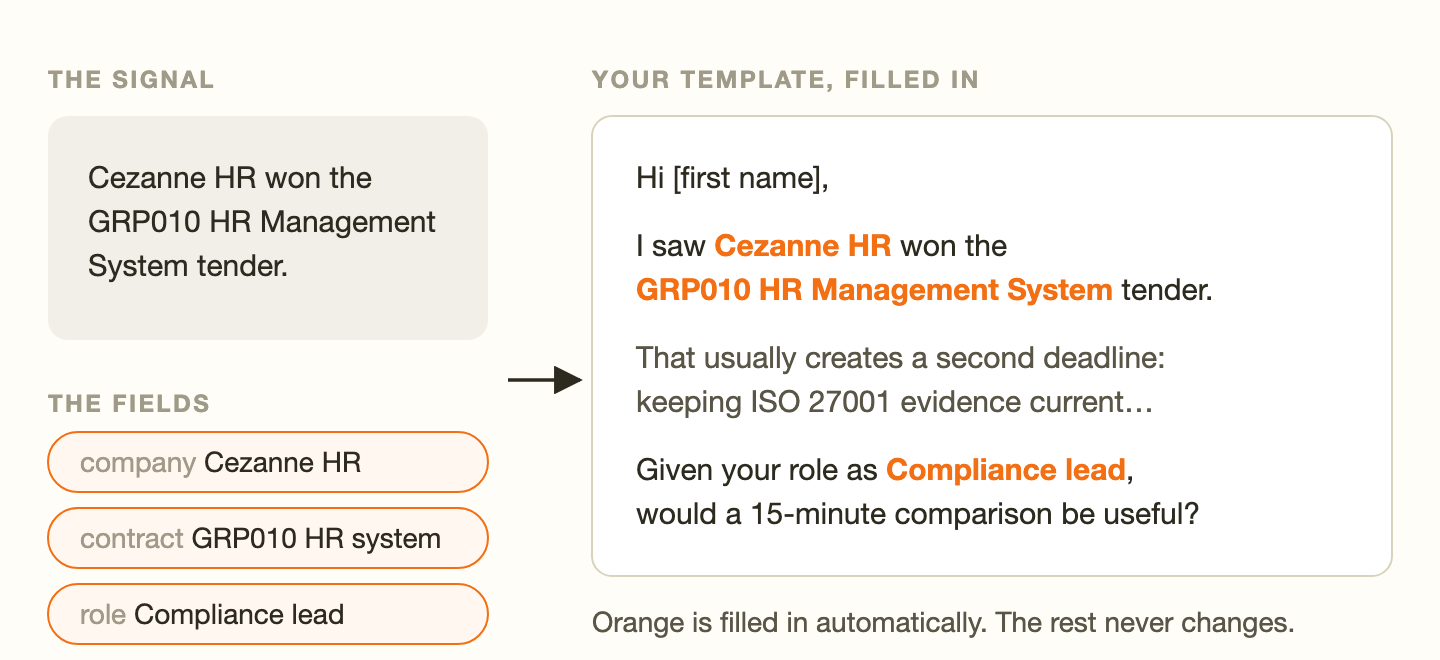
In this example we're doing programmatic copywriting. We take the clean signal, turn it into a set of fields, and fill those fields into a template we've already written. Because of that, the copy we send is consistent, instead of every email being written from scratch by AI. Nothing sends until someone on the team approves it.
What it found
When we ran it on 23 September 2026, two of the companies it qualified were:
- Ciphr, which won an NHS England eLearning contract (official notice).
- Cezanne HR, which won SCAPE's HR Management System contract (official notice).
Both are real, public contracts. We checked them against the official record. For each one, the flow found the security or compliance lead and drafted a message about that specific contract.
When it won't work
This works when the reason you win is a public, dated event, like a tender, a new regulation, a funding round or a new leader in the buying team. It won't work when deals come from relationships or referrals, because there's nothing public to find. And it can't help if nobody records why deals close, so start there.
Get the workflows
Both Clay workflows are free in our workflow library, with the full setup:
- Find closed-won lookalikes with a live signal
- Hand qualified accounts to Lemlist with an approval step
FAQs
What's the difference between a lookalike and a signal? A lookalike is a company that resembles your customers. A signal is something that just happened there and makes buying urgent. This flow uses both: lookalikes to find candidates, the signal to decide who to contact this week.
Do I have to use HubSpot and Lemlist? No. You can swap the CRM and the sequencer. Clay is the only essential piece.
Is the copy written by AI? Mostly not. AI only condenses the signal into one clean line. Everything else is a template we've written, so every message is consistent. A person approves each one before it sends.
Does it only work for tenders? No. Tenders were the reason in this example. Any public, dated event works the same way.
Build it with us
This is the core of our Signal-Based Outbound work. If you want it built on your CRM and your win reasons, book a call.