Signal
Lesaka Q4 FY2026: Net Revenue ZAR 6.33B, Adj. EBITDA ZAR 1.27B, Leverage 1.9x

September 10, 2026
Fintech
Signal
Key Facts
Signal Type
Signal
Industry
Fintech
Companies
Lesaka Technologies, Inc.
Date
September 10, 2026
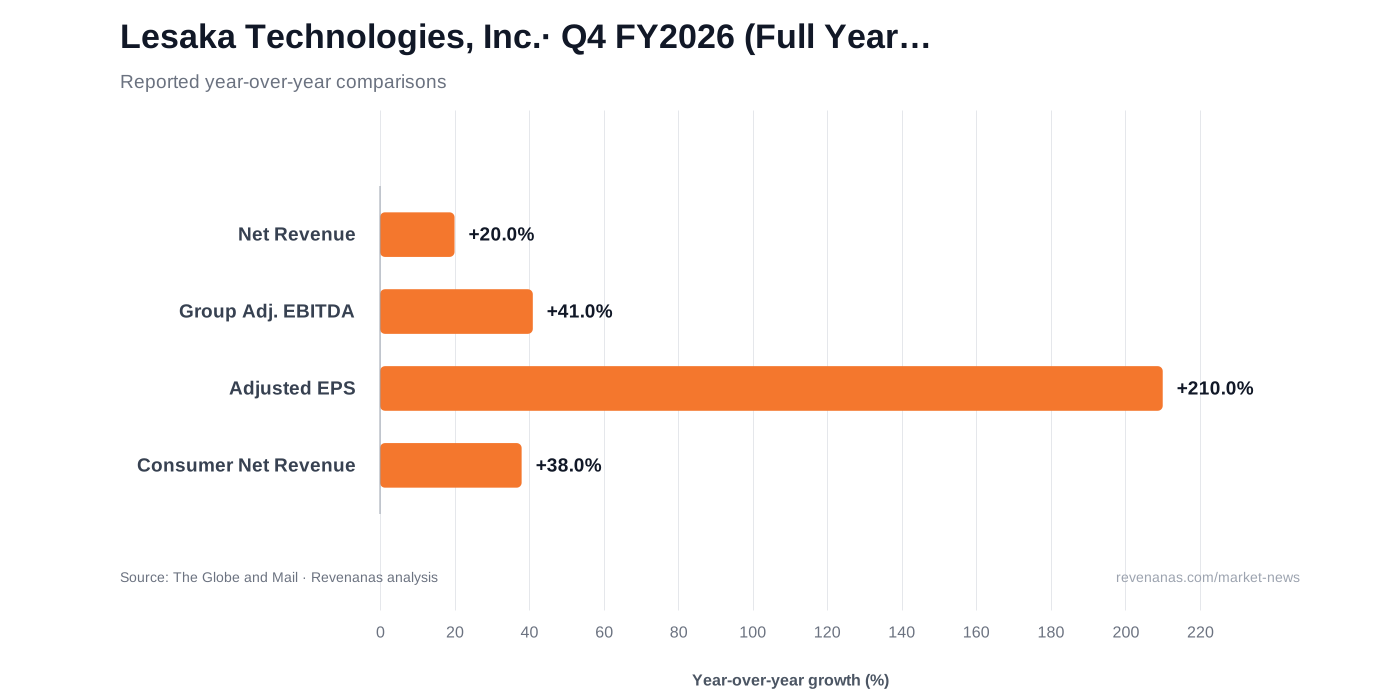
Lesaka closed fiscal 2026 with broad-based revenue growth and a materially stronger balance sheet. The company hit all four guidance measures it set for the year, including positive GAAP net income of roughly ZAR 40 million.
CEO Ali Mazanderani framed fiscal 2026 as a year of delivery, noting the company met every guidance measure it set. He highlighted the consolidation of offices under the One Lesaka brand as a cultural and operational milestone, with teams now co-located in Johannesburg and soon in Cape Town and Durban.
The Consumer division was the standout, growing net revenue 38% with customer acquisition up 19% in a largely flat market. Management emphasized growth came from acquisition rather than pricing, as blended transactional fees rose just 3%. Lending and insurance cross-sell into the account base grew 49% and 42% respectively.
Enterprise delivered on its build-phase promise from fiscal 2025, with core net revenue up 45%. Growth came across both volume and take rates in ADP and utilities, and the Recharger acquisition contributed to the quarter's 34% revenue increase.
Merchant had a harder year. Net revenue grew only 3%, and Q4 declined 10% to ZAR 729 million. Management attributed the pressure to take-rate compression across ADP, cash, and acquiring, alongside integration work as multiple businesses were brought together. ADP take rates fell 25%, driven by mobile network commission resets and a mix shift toward lower-margin supplier payments.
CFO Dan Smith pointed to the reduction in non-operational charges from ZAR 1.7 billion to ZAR 35 million as evidence of cleaner earnings. Once-off charges also fell from ZAR 322 million to ZAR 91 million. He guided FY2027 group cost run rate to approximately ZAR 350 million, up from ZAR 238 million, reflecting investment in data, people, and compliance capabilities.
On the pending Bank Zero acquisition, management said it will serve as a platform for migrating lending book funding to customer deposits. The leverage target post-acquisition is below 1x by June 2027, which would further reduce funding costs.
The One Lesaka consolidation is more than rebranding. Co-locating teams is intended to drive cross-pollination between Consumer, Enterprise, and Merchant, which management views as a core competitive advantage. The timing matters because Merchant is in integration mode and needs product and operational support to stabilize take rates.
The Bank Zero acquisition is the most strategically significant item on the horizon. If Lesaka can migrate lending book funding to customer deposits, it structurally lowers its cost of funds. That matters most for the Merchant lending business, where originations improved sequentially through the year and the book closed 15% higher at ZAR 463 million, but where management acknowledged under-indexing on expectations.
Merchant take-rate pressure is the clearest operational risk. Acquiring TPV grew 27% to ZAR 44 billion and ADP TPV grew 31% to ZAR 55 billion for the year, but revenue per transaction declined across products. The supplier payments network more than doubled in two years, which adds volume but at lower margins. Monetization strategies for that volume are still being pursued.
Product penetration declined, with merchants using three or more products falling from roughly 10% to 7%. Management attributed this to arithmetic, as new community merchants typically onboard with a single product. The test will be whether multi-product bundling can scale as those merchants mature.
The Unity cloud-native hospitality platform is central to the long-term Merchant strategy. Only 16% of the software base has migrated so far. Unity enables acquiring at scale and ties software to payments, which is the integrated corporate offering Lesaka is deliberately pivoting toward.
Capital allocation is tightening. FY2027 operational CapEx is guided to ZAR 450 million, plus ZAR 100 million in non-recurring leasehold improvements. Management expects the CapEx-to-EBITDA ratio to trend below 30% in the medium term, down from 33% on a trailing 12-month basis.
I would watch four things over the next two quarters:
Source:
The Globe and MailGet fintech signals in your CRM
Regulatory fines, fraud incidents, payment outages, funding, and acquisitions across fintech.